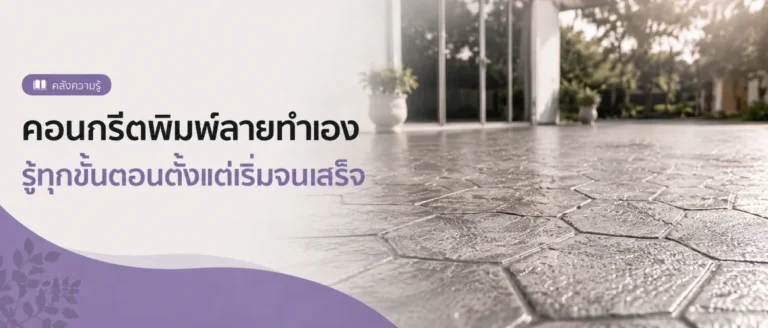
Before attempting to install stamped concrete yourself, it is important to study the process and prepare thoroughly. This includes understanding the required materials and tools, installation steps, and essential precautions. Stamped concrete is typically installed by an experienced professional team to ensure an efficient process and a high-quality finish. Since the work involves placing, finishing, and stamping fresh concrete within a limited working time, mistakes can become difficult or even impossible to correct once the concrete begins to set. In serious cases, an unsuccessful installation may require the affected concrete to be removed and replaced entirely, resulting in additional time, labor, and expense. Understanding the correct procedures and potential risks before starting is therefore essential to help prevent costly mistakes and achieve a durable, professional-quality result.
The basic steps for a DIY stamped concrete installation are as follows:
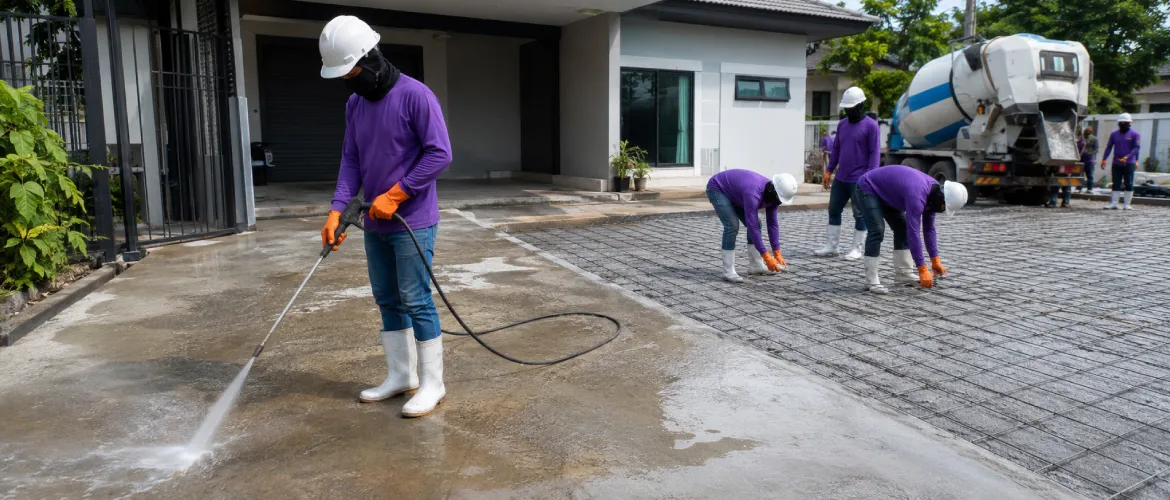
Step 1: Clean the work area thoroughly to prepare for installing the formwork and laying the wire mesh.
In this section, the foundation will be prepared from the structure to make it strong and durable, able to withstand weight and pressure well.
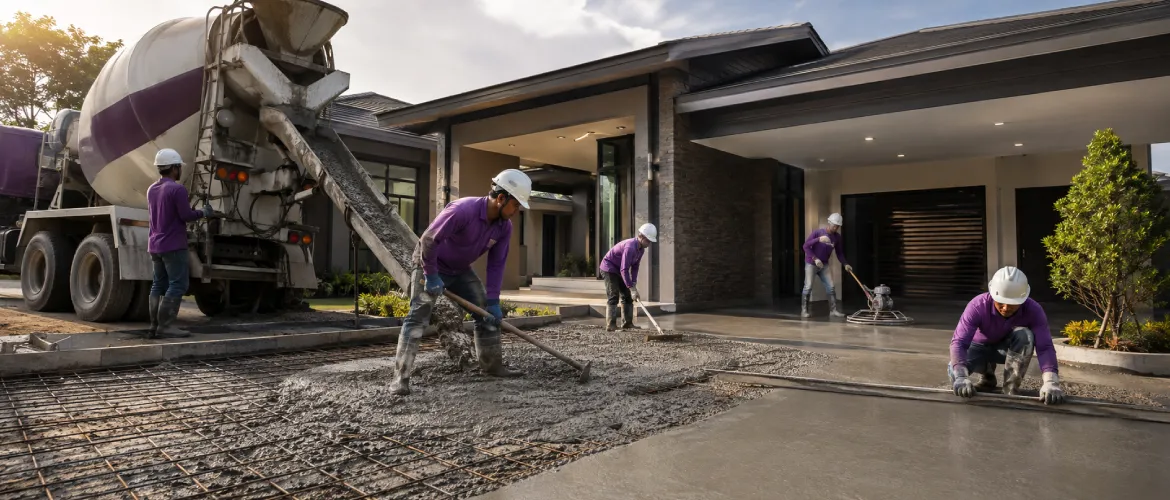
ขั้นตอนที่ 2 : เทคอนกรีตตามสเปคมาตรฐานความหนา 5 ซม. จากนั้นจึงทำการปาดเรียบไล่ระดับพื้นผิว
After the Wire Mesh reinforcement has been properly installed, the next step is to pour the concrete according to the required specifications. Both reinforcement installation and concrete placement are critical to the strength, durability, and long-term performance of stamped concrete. These stages require proper planning, correct installation techniques, and careful quality control. For this reason, it is recommended that the work be supervised and carried out by an experienced professional team.
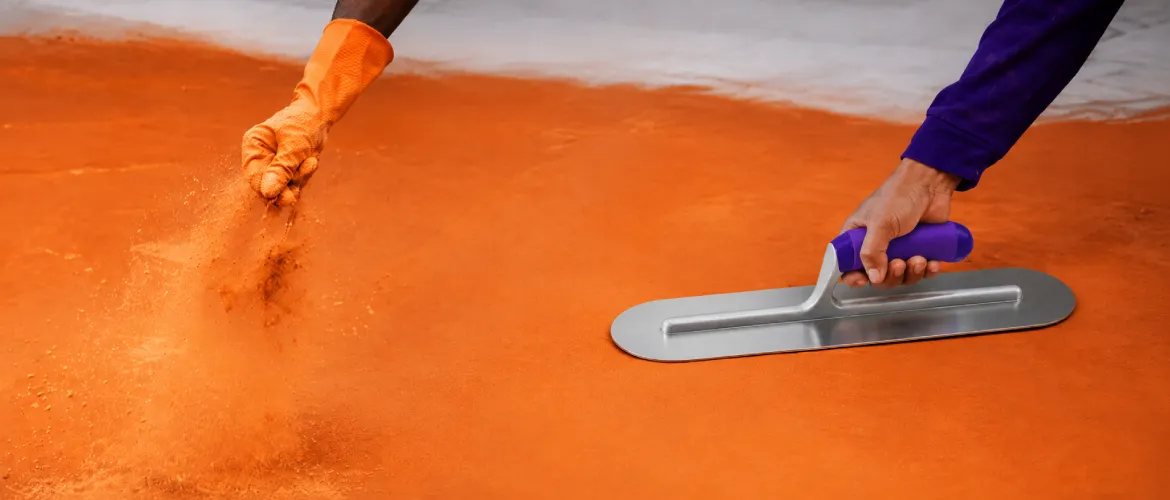
Step 3: Apply “PEAK Cement Color 4-in-1” evenly over the fresh concrete surface, then work it into the surface with a trowel until the color is smooth and uniform.
The polishing process requires skilled workers and teams with experience in polishing cement. If there is a mistake, the cement color will be uneven and leave unsightly stains.
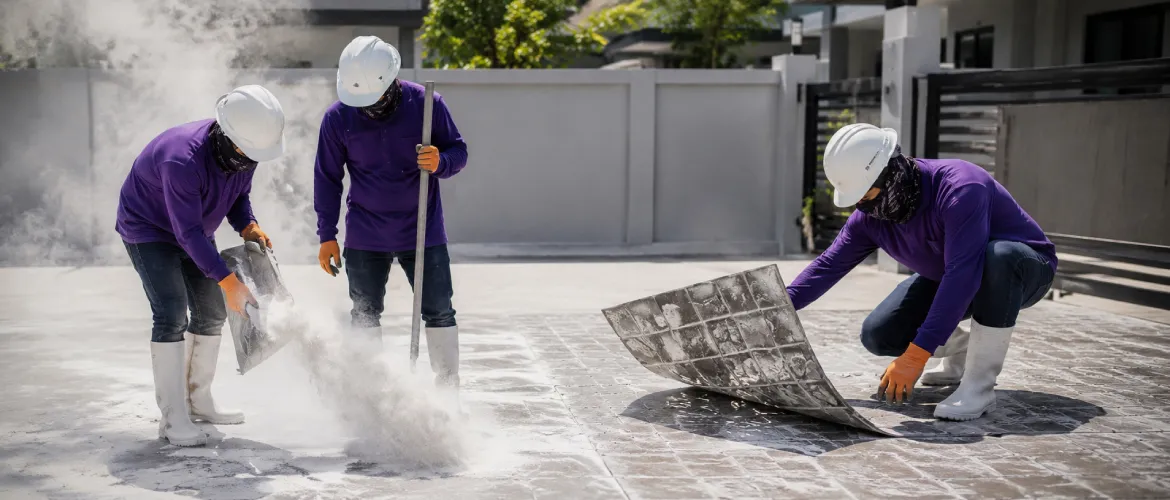
Step 4: Apply “PEAK Release Agent” evenly across the entire surface, then imprint the concrete using the selected stamping mats.
Sprinkling Peak Release agents prevents the printed sheet from sticking to the concrete surface, making the printed pattern clear and beautiful.
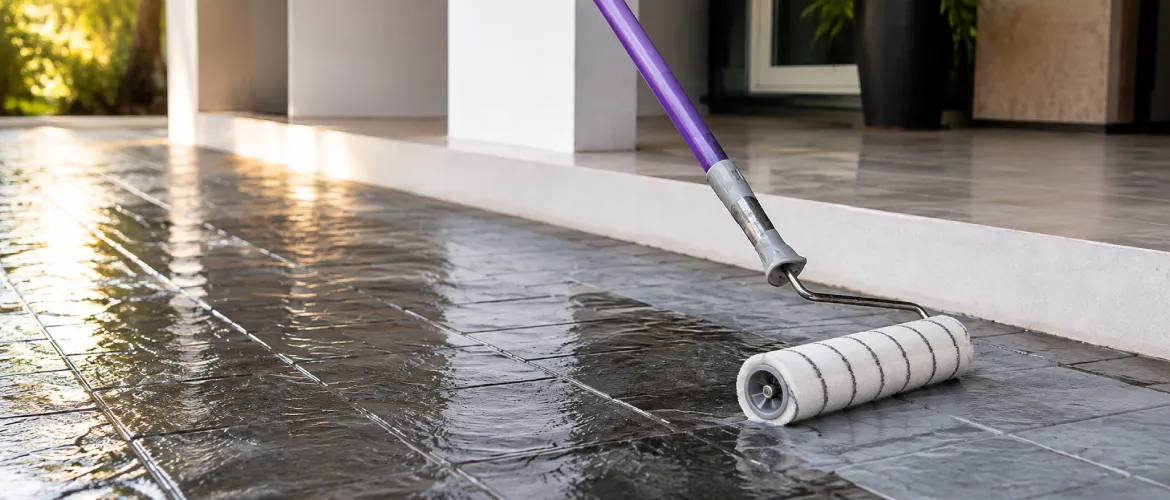
Step 5: When the stamped concrete floor has hardened, clean the surface.
Clean the concrete surface thoroughly to remove dirt and any remaining release agent. Then, cut the required control joints and complete the finishing details for a clean, professional appearance. Finally, apply PEAK A-200 Super Coat to help reduce water and moisture penetration, protect the surface from conditions that encourage mold growth, and seal the pores of the concrete. The coating also enhances the surface color and makes the stamped concrete easier to clean and maintain.
Precautions after pouring the stamped concrete floor
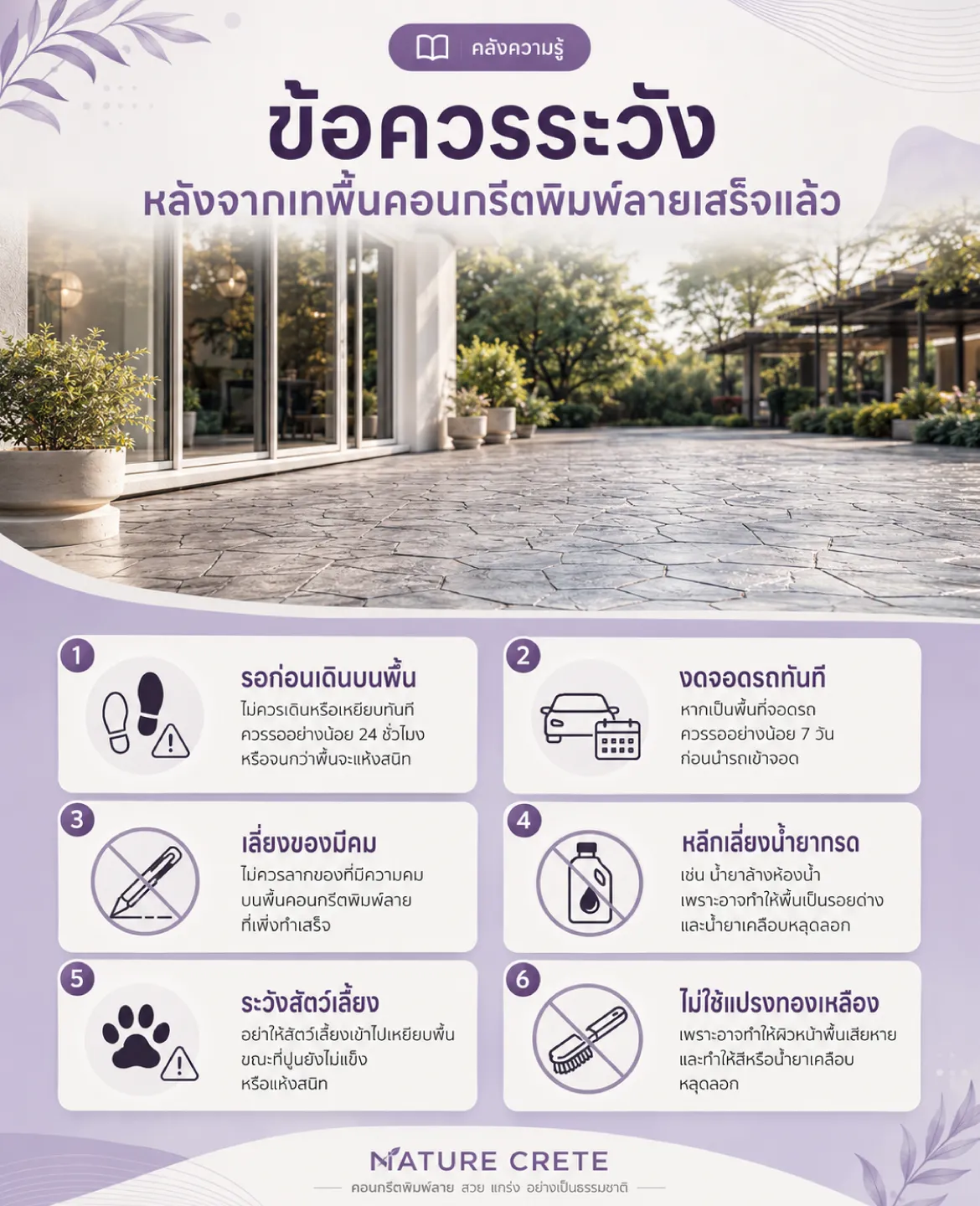
- Should not walk or step on stamped concrete floors immediately after application. Wait at least 24 hours or until the floor is completely dry.
- If you are building a parking lot, you should not park your car on the stamped concrete floor after it is completed. You should wait at least 7 days.
- Do not drag sharp objects onto the newly finished stamped concrete floor.
- You should not use acidic liquids to clean the floor, such as bathroom cleaner, as this will leave stains on the floor and cause the coating to peel off.
- Be careful not to let pets step on the floor while the cement is not hard or completely dry.
- Do not use a brass brush to scrub the floor as it may damage the concrete surface and cause the paint or coating to peel off.
Conclusion
Installing stamped concrete yourself requires a thorough understanding of every stage of the process, including the materials and tools involved, key precautions, and the practical skills needed to achieve consistent results. Because stamped concrete requires precise timing and specialized techniques, mistakes can sometimes be difficult to correct and may even require the affected area to be removed and redone. For this reason, many homeowners choose to work with a professional stamped concrete contractor. An experienced team can help assess the site, calculate the required area and materials, control project costs, and carry out the installation efficiently reducing the risk of costly mistakes while achieving a more reliable and professional-quality finish.