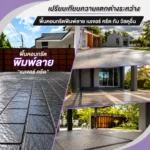

Many people often wonder about the similarities and differences between stamped concrete floors and stamped concrete tiles, as well as the types of projects each is suitable for. Because both products share similar names and primarily use concrete, it can be confusing to distinguish between them. To help you make the best choice for your needs, we have gathered some informative details for your consideration.
Stamped Concrete Floor

Stamped concrete, also commonly known as decorative stamped concrete, is designed to provide a strong and durable concrete surface. The installation begins with appropriately specified wire mesh reinforcement, followed by high-quality ready-mixed concrete poured to a minimum thickness of 5 cm or more, depending on the existing ground conditions, intended use, and assessment by the engineering team. A color hardener and release agent are then applied before specialized stamping mats are pressed into the fresh concrete to create the selected pattern and texture. Once the concrete has properly set and cured, it provides a strong and durable surface with good load-bearing performance. With proper installation and maintenance, stamped concrete is also easy to clean and maintain and offers good resistance to everyday wear, impact, and surface pressure, making it suitable for a wide range of outdoor applications.
Stamped Concrete Tile
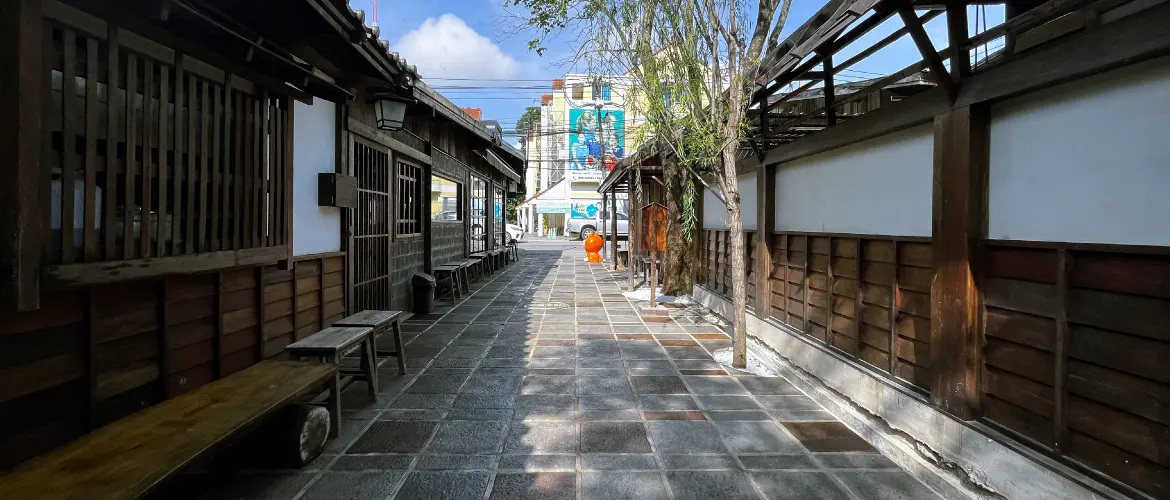
Stamped concrete tiles may also be referred to as concrete paving slabs, concrete tiles, or concrete paving materials. Since concrete is their primary material, they offer good strength and durability for outdoor applications. They are available in various sizes and shapes, with 40 × 40 cm and 30 × 60 cm being among the most popular sizes. Square and rectangular slabs are commonly used because they are easy to arrange and install, while other options such as circular, hexagonal, and free-form shapes are also available. One of the key advantages of stamped concrete tile is installation flexibility. Individual slabs can be transported and installed relatively easily, making them suitable for areas where a permanent cast-in-place surface is not required or where delivering ready-mixed concrete to the site may be difficult. They can also be removed, rearranged, or replaced more easily if the landscape design needs to change in the future. Stamped concrete tiles are also easy to maintain and offer good resistance to everyday wear and impact. Their overall load-bearing performance and durability depend on the slab specification, installation method, base preparation, and intended application.
The Difference Between Stamped Concrete and Stamped Concrete Paving Slabs
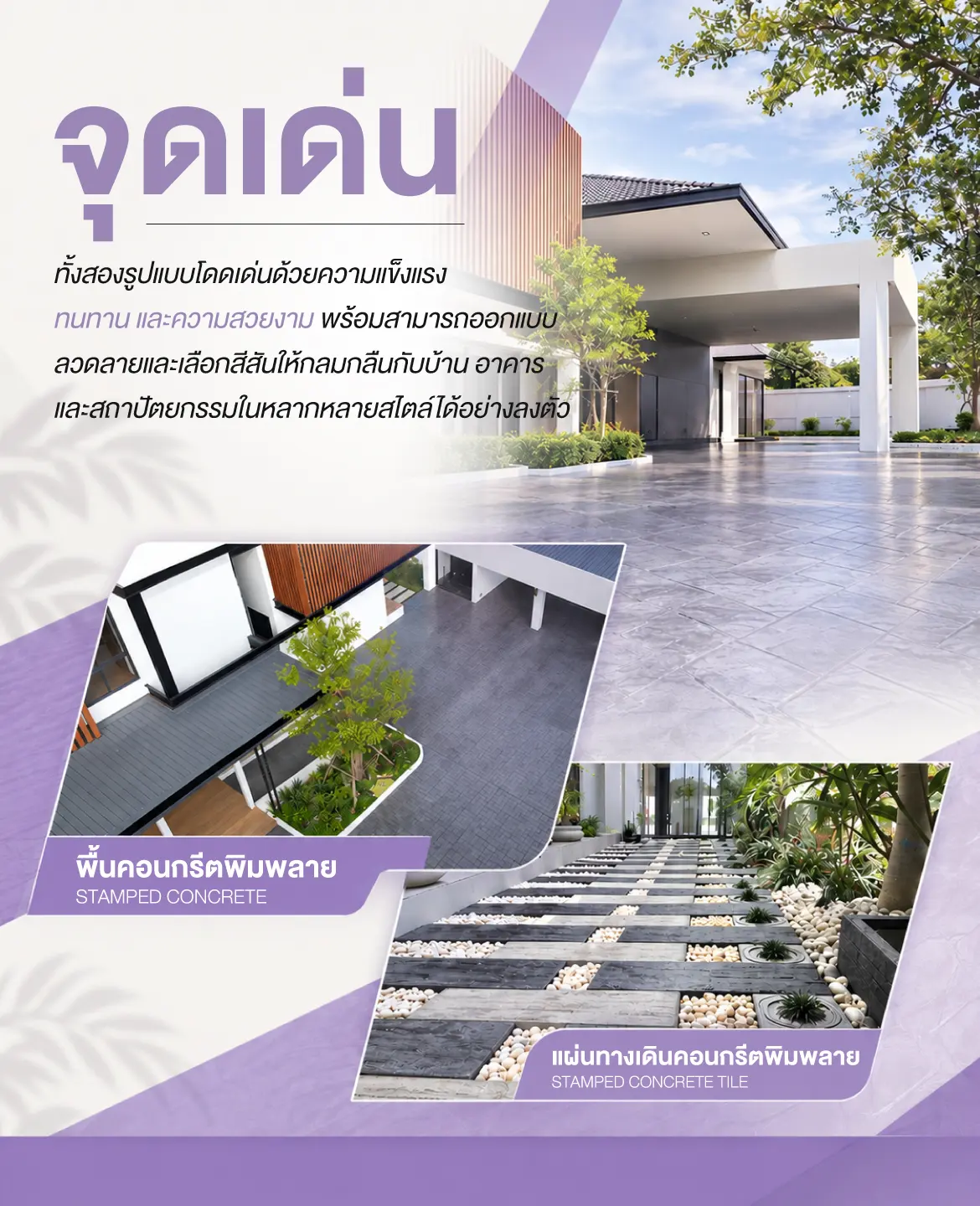
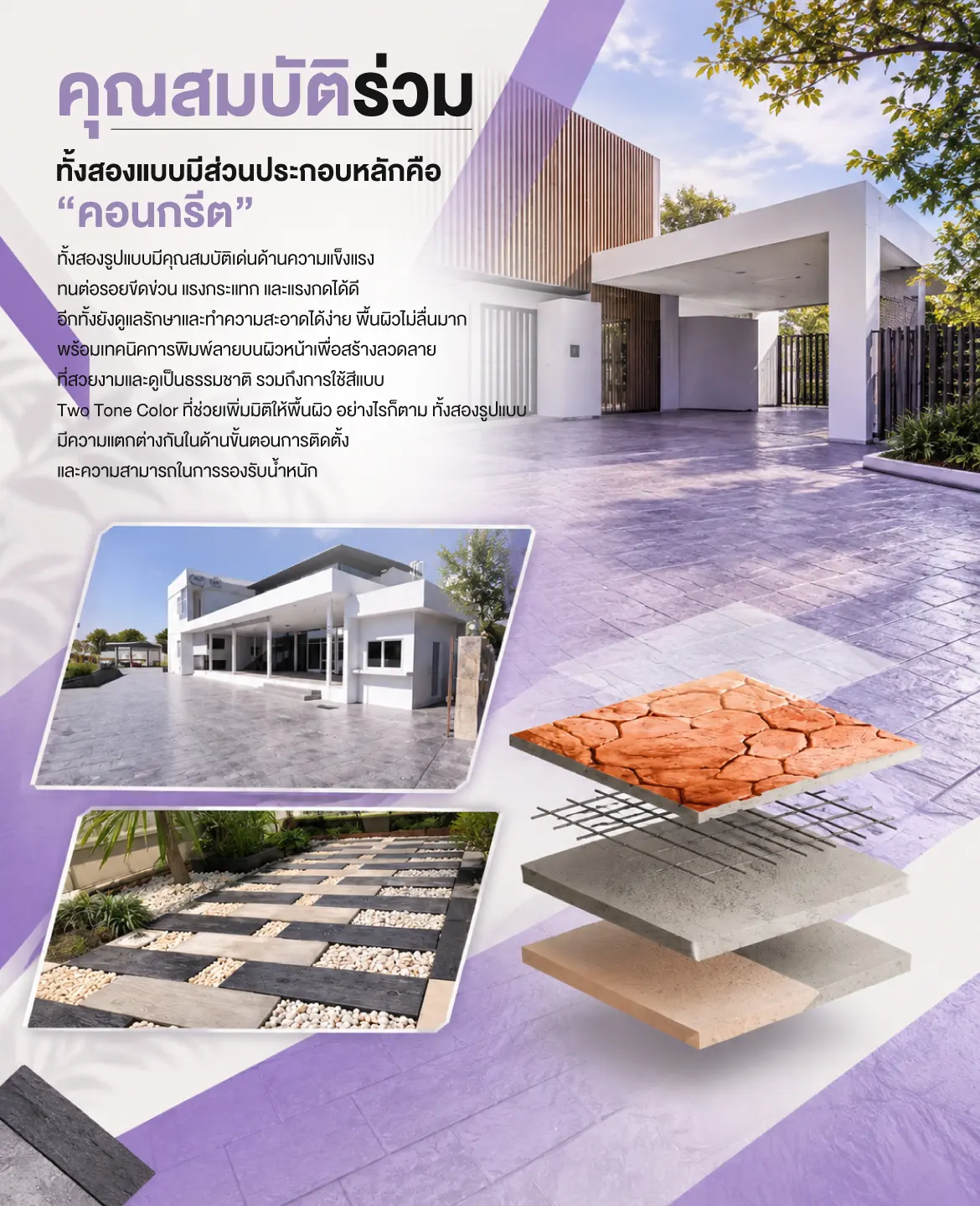
Both stamped concrete and stamped concrete tiles are primarily made from concrete and share several key characteristics. They offer good resistance to everyday wear and impact, are relatively easy to clean and maintain, and feature textured surfaces that can provide improved slip resistance. Both options can also be customized with a variety of patterns, colors, and surface finishes to complement homes, buildings, landscapes, and different architectural styles. The main differences between the two are their installation methods and load-bearing capabilities. Stamped concrete is cast and finished directly on-site as a continuous concrete slab, while stamped concrete tiles are precast individual units that are transported and installed separately. Their suitability and load-bearing performance therefore depend on the intended application, base preparation, slab specifications, and installation method.
Stamped concrete is constructed as a reinforced, cast-in-place concrete slab. The installation includes structural preparation, Wire Mesh reinforcement, and concrete poured directly on-site. This continuous slab construction generally provides greater load-bearing capacity than individual stamped concrete tiles, as loads and pressure can be distributed across a larger area of the concrete surface.
Stamped concrete tiles can be installed individually or arranged in combinations of different colors and patterns to create a customized design. They can be laid on a prepared and leveled sand base or installed with suitable tile adhesive, depending on the site conditions and intended application. Because the slabs tile are precast and ready for installation, the process can be more convenient and create less on-site mess compared with cast-in-place stamped concrete, with less exposure to wet concrete residue, color hardener, and release agent during installation.
Provide recommendations on how to select the best option suitable for your intended purpose.
Now that we know the differences between stamped concrete floors and stamped concrete tiles, let’s look at how to choose the right one for your needs.
Purpose of using stamped concrete floor
Because stamped concrete can be installed at different slab thicknesses according to the project requirements, it can generally provide greater load-bearing capacity than stamped concrete tile with a fixed standard thickness. This makes stamped concrete suitable for applications requiring greater strength and durability, such as roads, outdoor walkways, garden paths, and parking areas. For projects where long-term structural performance and higher load-bearing capacity are priorities, cast-in-place stamped concrete is often preferred over stamped concrete tile.
Purpose of using stamped concrete tile
Stamped concrete tiles provide good load-bearing performance while offering the advantage of being easy to transport and install. They are particularly suitable for areas where cast-in-place stamped concrete may be difficult to install, such as narrow or restricted spaces where ready-mix concrete trucks or construction equipment cannot easily access the site. They are also commonly used for garden landscaping, garden paths, parking areas, and other outdoor spaces because installation is relatively quick and convenient. Individual slabs provide greater design flexibility, allowing different patterns, colors, and layouts to be mixed and arranged to suit the desired style. However, stamped concrete tiles are generally not recommended for road applications, where a properly designed cast-in-place concrete slab is typically more suitable for higher and repeated vehicle loads.
However, each type of flooring material has different advantages and disadvantages. Choosing the right flooring material should also take into account other factors, such as its use, suitability for installation in that area, or compatibility with the surrounding architecture.

Conclusion
Both stamped concrete and stamped concrete tiles offer their own advantages, while sharing key qualities such as strength, durability, and design flexibility. A wide range of patterns and colors can be selected to complement homes, buildings, landscapes, and various architectural styles. Before choosing either flooring option, however, it is important to consider a reliable and experienced brand that uses quality materials and proper production or installation methods. The long-term strength, appearance, and durability of both stamped concrete and stamped concrete tiles depend significantly on the quality of the materials and workmanship. Choosing a product based on appearance alone, without considering material quality and installation standards, may result in reduced durability, lower structural performance, and a shorter service life over time.
ด้วยความไว้วางใจจากลูกค้าและประสบการณ์ที่ผ่านมามากกว่า 20 ปี เนเจอร์ ครีต เราให้บริการทั้งพื้นคอนกรีตพิมพ์ลายและแผ่นทางเดินคอนกรีตพิมพ์ลายที่สวยงามทั้งคุณภาพและราคาจากการเลือกใช้วัสดุคุณภาพสูงในกระบวนการผลิตแผ่นทางเดินคอนกรีตพิมพ์ลาย และงานก่อสร้างพื้นคอนกรีตพิมพ์ลาย เราพร้อมให้บริการและเติมเต็มทุกจินตนาการ สนองความต้องการที่แท้จริงของลูกค้า เรายินดีให้คำปรึกษาโดยทีมสถาปนิก วิศวกร และนักออกแบบมืออาชีพได้ฟรีโดยไม่มีค่าใช้จ่าย เพื่อสร้างสรรค์พื้นที่ของคุณให้มีทั้งความคุ้มค่าและคุณภาพ ยิ่งไปกว่านั้นเรามีบริการที่รวดเร็วฉับไว และการบริการดูแลหลังการขายให้ลูกค้ามั่นใจในคุณภาพของงานที่ครอบคลุมและมีคุณภาพที่สุด !